One of the easiest ways to ruin your first ultramarathon happens within the first few miles.
The excitement is contagious.
The countdown ends, the crowd cheers, and suddenly everyone around you seems to be moving faster than expected. Adrenaline takes over, and before you know it, you’re running someone else’s pace instead of your own.
I can tell you from experience—being only 30 miles into a 100-mile race with legs that already feel like cement blocks is not where you want to be.
The beginning of an ultramarathon feels effortless…
Until it doesn’t.
The Race Is Longer Than You Think
One of the greatest lessons ultrarunning teaches is patience.
No matter how strong you feel early on, the race has a way of revealing whether you’ve respected the distance.
The miles always collect their debt.
I’ve learned to expect that surge of adrenaline at every starting line. Instead of fighting it, I acknowledge it, ease back, and wait until my breathing and effort feel natural again.
That’s when my race begins.
Don’t Borrow Someone Else’s Pace
During one of my first marathons, I noticed a runner beside me who was full of energy.
He was smiling, waving to spectators, and bouncing from one side of the road to the other. His excitement was impossible to miss.
I remember thinking, I hope he’s saving some of that energy.
Around mile sixteen, I saw him again.
This time, he was lying on the side of the road after dropping out.
I don’t share that story to criticize him. Most runners—including me—have made that mistake in one form or another.
Sometimes enthusiasm convinces us we’re stronger than we really are.
The challenge is learning to separate excitement from effort.
Run Your Race
One of the hardest things for a first-time ultrarunner is ignoring everyone else.
Someone passes you on a climb. Another runner takes off after an aid station. Someone who looks less experienced is moving faster than you.
It’s tempting to respond.
Don’t.
Your race has nothing to do with theirs.
Every runner arrives with different goals, different training, and different abilities. Trying to match another person’s pace is like following someone else’s map through unfamiliar terrain.
The only pace that matters is the one you can sustain.
Ironically, I’ve found that if you pace yourself well, you’ll often have something left late in the race. That’s when you can gradually increase your effort until you empty the tank.
It’s a much better feeling than spending hours trying to recover from going out too fast.
RELATED: The Hardest Part of Running Your First Ultramarathon (It’s Not What You Think)
Listen to Your Body
People often ask what pace they should run. The answer is different for everyone.
Personally, I rarely run with a watch. I’ve always preferred listening to my body instead of chasing numbers.
Some days the effort feels easy. Some days it doesn’t.
Learning the difference between an adrenaline-fueled pace and a sustainable pace is one of the most valuable skills you’ll ever develop as an ultrarunner.
Your body usually knows the truth long before your mind admits it.
I think back to one of my best 50-mile races. I stayed right on the edge the entire day—not over it, not under it. Just uncomfortable enough to know I was giving everything I had without crossing the line into survival mode.
I led from start to finish that day.
Not because I chased the other runners or obsessed over my pace, but because I stayed consistent and simply ran the best race my body could sustain.
Patience Is a Competitive Advantage
Ultrarunning rewards restraint.
The runners who look strongest at mile five aren’t always the ones who finish strongest at mile fifty.
Patience conserves energy. Patience keeps you fueling. Patience gives you room to adapt when things don’t go according to plan.
Most importantly, patience leaves something in reserve when the race finally asks everything of you.
And it will.
RELATED: Why You Must Decide You’ll Finish Before Race Day
Finish Strong
It’s easy to get caught up in what everyone else is doing. But ultrarunning has a way of bringing your focus back where it belongs.
Your breathing. Your effort. Your next step.
I’ve learned that the real competition isn’t against the runners around me. It’s against the voice inside me that wants to rush the process.
When you learn to quiet that voice, something changes. You stop chasing other runners and unrealistic expectations. Instead, you settle into your own rhythm.
More often than not, that’s the rhythm that carries you to the finish line.
Because in ultrarunning, as in life, the people who go out the fastest don’t always finish the strongest.
The runners who finish well are usually the ones who stay patient, disciplined, and resilient—trusting the process one mile at a time.
Ready for Your First Ultramarathon?
If you’re looking for a simple, step-by-step guide to training for your first 50K, check out Long Run Academy: Your First Ultramarathon.
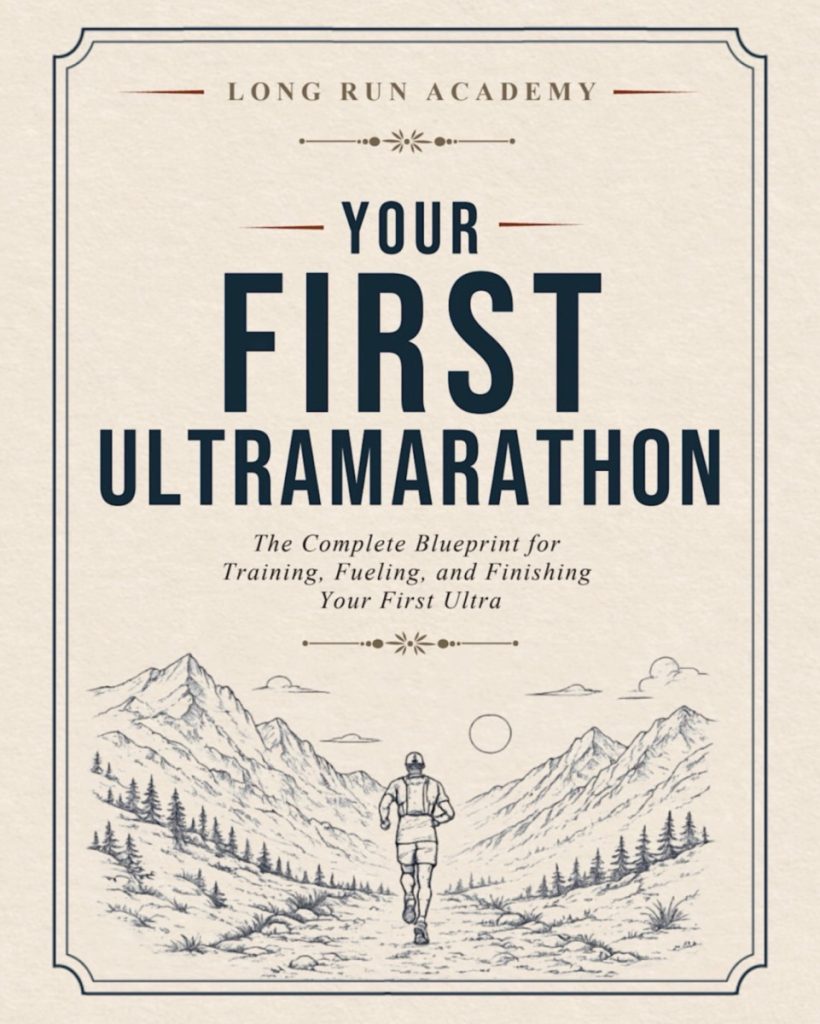
Inside, you’ll learn how to choose your race, train with confidence, fuel properly, and prepare for race day—without overcomplicating the process.
About Long Run Academy
Long Run Academy is the educational platform of LongRunLiving, helping runners build endurance, confidence, and a lifelong love for running—from the first mile to the first ultramarathon.